
Wilton Polypropylene Carpet for Bar Playroom
Product Details
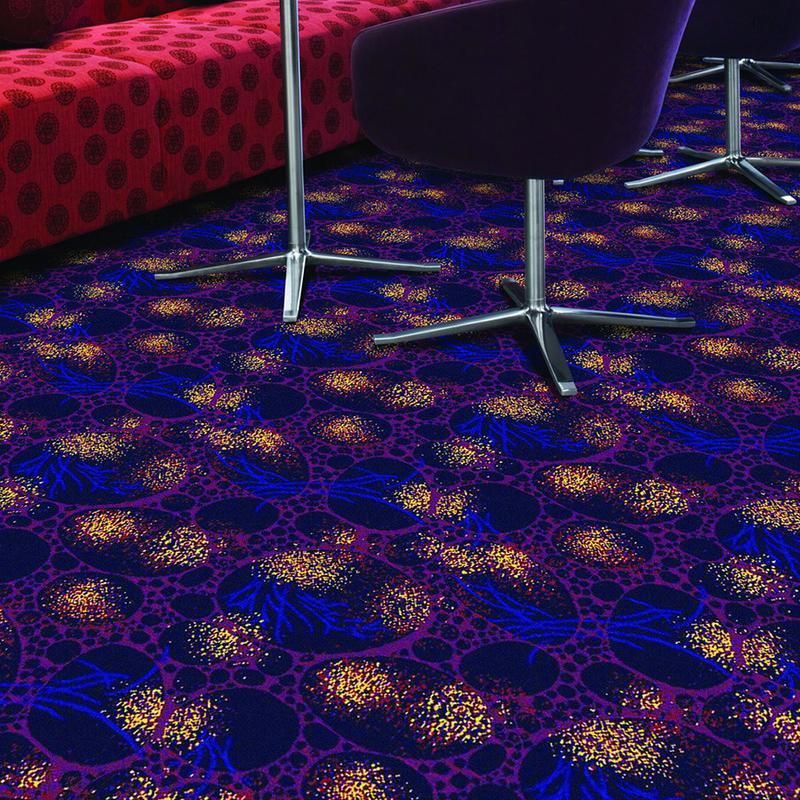
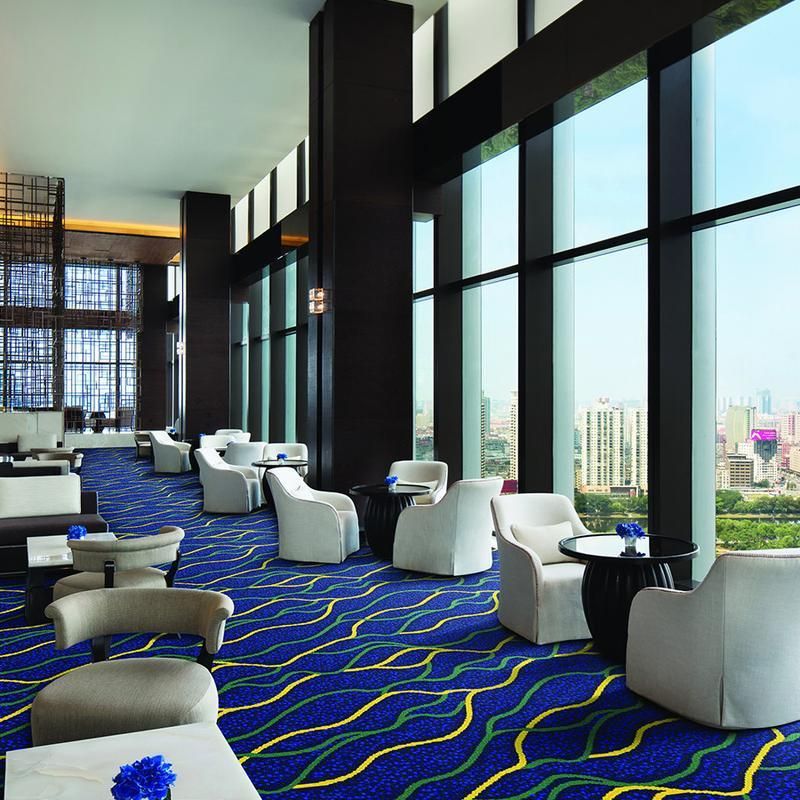
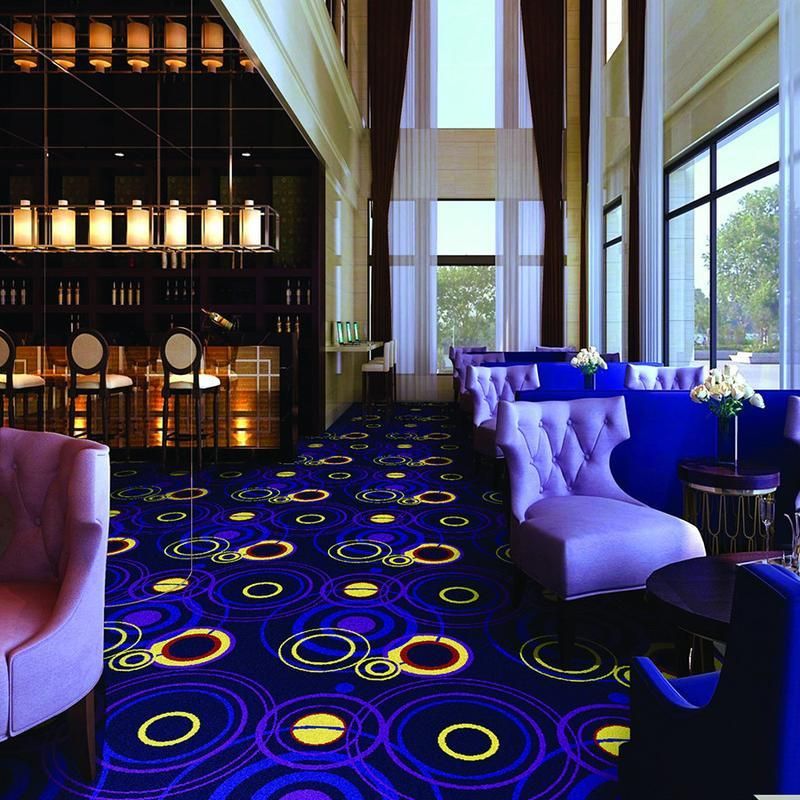
Bule Series PP Wilton Woven Carpet for Bar or Playroom with Wear Resistance
Production Description
Wilton carpets are ideal for express hotels. The primary material used in Wilton carpets is polypropylene, which is relatively inexpensive. Additionally, the weaving speed of the Wilton machine is quite fast, significantly reducing production costs. Despite the low cost of Wilton carpets, their usability and aesthetic appeal remain unaffected. They can be woven into beautiful patterns using a simple palette of six to eight colors. Wilton carpets have a wide range of applications, not only in bedrooms where comfort is essential but also in high-traffic areas such as corridors. This versatility is due to the compact structure of Wilton carpets, with a heavy pile yarn per square meter and a plush fabric, making them suitable for various occasions. Kaili Carpet operates a total of 13 Wilton machines, producing various types of Wilton carpets.
Specifications
| Technics | Woven Carpet |
|---|---|
| H.S Code | 5703300000 |
| Area of Suitability | bar, playroom, club, home theater |
| Yarn Fiber | 100% polypropylene |
| Backing | PP, Polyester |
| Dye Method | solution dye |
| Pile Height | 8mm |
| Density | 320*400 |
| Construction | Cut pile |
| Warranties | 8-year carpet wear warranty |
Production Line
Installation
Machine-made carpets are typically installed in rolls. They should be transported to the installation site 24 hours prior to laying. Upon arrival, they should be opened, flattened, and any crimp stress should be eliminated, allowing the carpet sufficient time to adapt to the temperature and humidity of the unpaved environment. The ideal temperature for installation is between 18-35 degrees Celsius, ensuring a smoother laying process.
Underlays are placed beneath the carpet to enhance softness, comfort, and moisture resistance. There are various types of rubber pads available on the market. It is essential to select the appropriate underlay based on the intended use area. In installation zones that frequently experience external forces, such as corridors, the underlay should not be overly thick, generally around 1.0 cm.