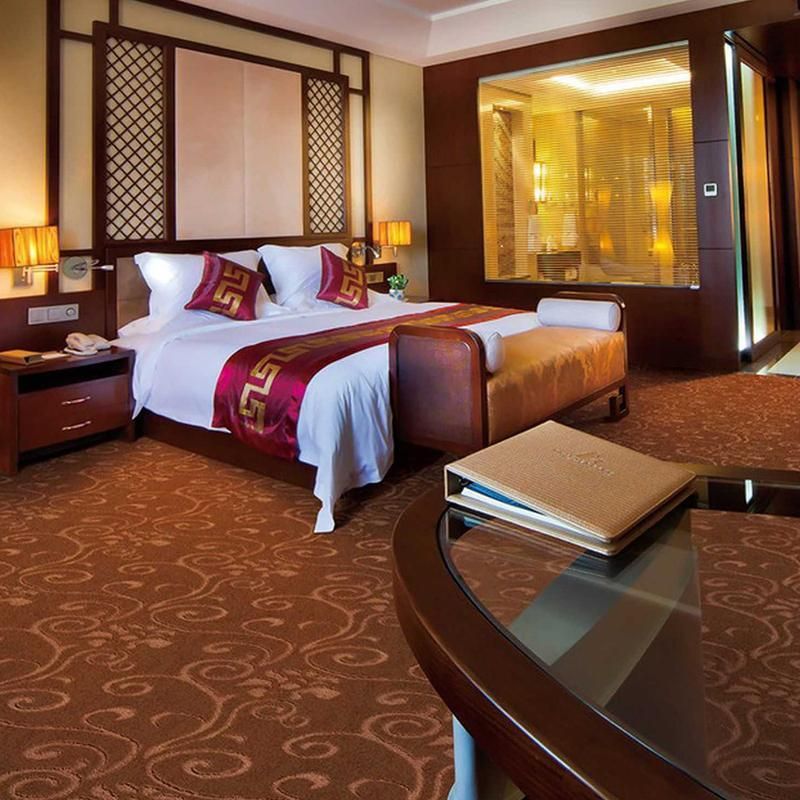
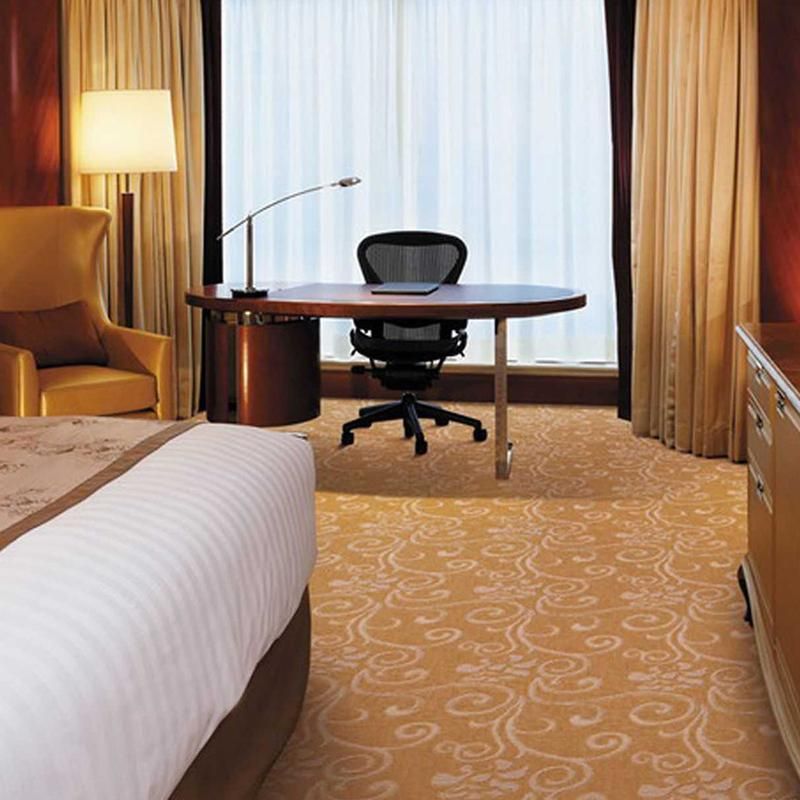
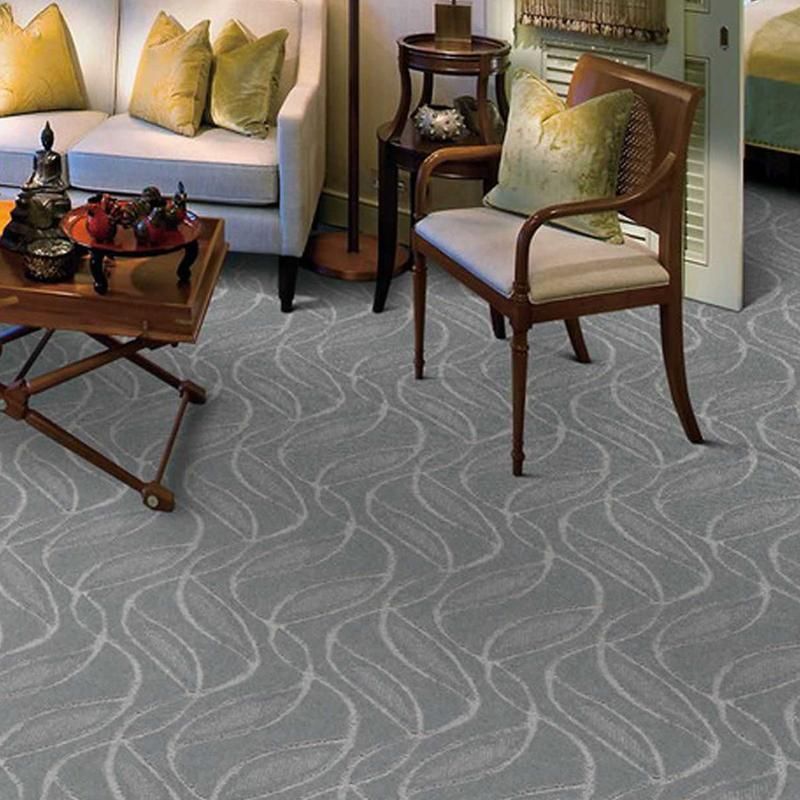
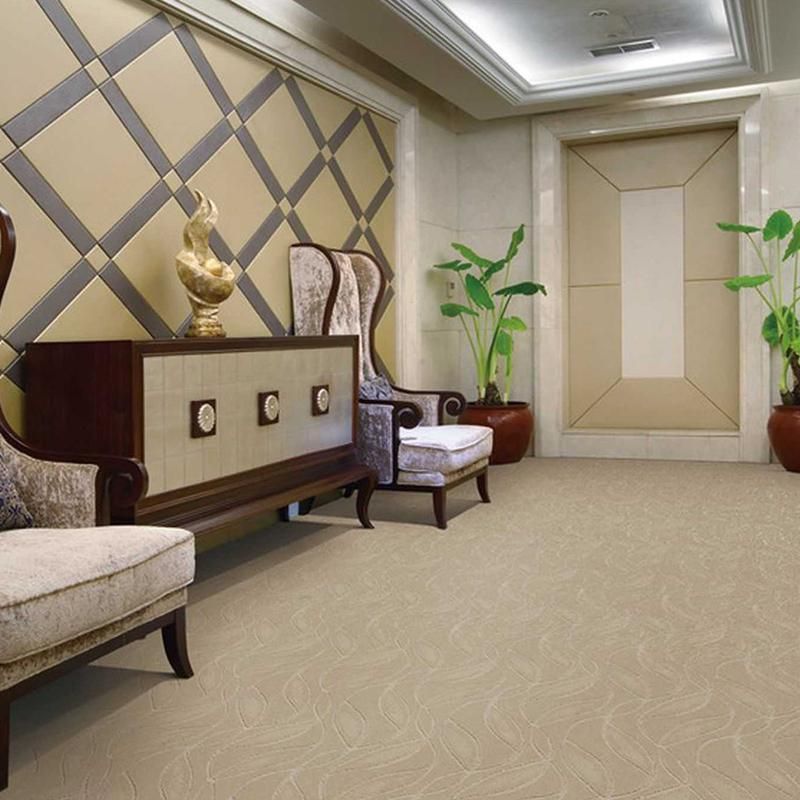
Luxury Tufted Broadloom Carpet for Rooms
Product Details
Luxury Tufted Broadloom Carpet for Rooms
Specifications
| Series | Chuncheng |
|---|---|
| Recommended Uses | Family room, Hotel, Office |
| Fiber Material | BCF Polypropylene |
| Primary Backing | Woven PP |
| Secondary Backing | Action back |
| Gauge | 1/8 |
| Width | 4m |
| Color | 4 colors |
| Features | Stain resistant, durable, hard-wearing |
| Sample | Available |
Detailed Images
What are the differences between woven carpet and tufted carpet?
Woven carpet dominated the carpeting market from its invention until the 1950s, when tufted carpeting began to rise to its current dominance, accounting for about 95 percent of the wall-to-wall market.
Cost
Many factors determine the cost of both woven and tufted wall-to-wall carpeting. These include density, type of fiber (wool is still the premium material), and the variety of weave. Therefore, it is challenging to provide a precise estimate of the price difference between the two construction methods.
Construction
Looms are used to create woven carpeting, where the facing (top side) yarn interlaces with the backing yarn. While minimal backing material is necessary, according to the Carpet and Rug Institute (CRI), some latex coating is applied to the bottom for bulk.
Although tufted carpeting may be referred to as broadloom due to its width, it is created on specialized multi-needle sewing machines. These machines punch each tuft through the main backing fabric, which is usually plastic, and form a loop to hold it in place. Glue and secondary backings are then applied to the main backing.
Materials
Wool and four synthetics — nylon, polyester, olefin (polypropylene), and triexta — are the primary fibers used in wall-to-wall carpeting.
- Wool is the most expensive fiber but is naturally stain-resistant and flame-retardant.
- Nylon is one of the most popular types of carpet due to its color range and durability.
- Polyester has a wool-like appearance and is soft underfoot.
- Olefin is glossy and one of the least expensive fibers.
- Triexta is chemically similar to polyester fiber but is more durable and resilient.
For more options, check out our Nylon Printed Carpet or explore our Tufted Broadloom Carpet.
Production Line